Hey there, fellow food wanderer. Picture this: It’s a sticky summer evening in my grandma’s kitchen back in rural Pennsylvania, the air thick with the sizzle of oil and the scent of something golden and forbidden. She was frying up fresh-cut potato wedges—nothing fancy, just spuds from the garden dusted with salt and a whisper of paprika. I’d sneak bites straight from the paper towel, burning my tongue but grinning like I’d won the lottery. That simple ritual hooked me on fried foods forever. They’re not just snacks; they’re stories on a plate, crispy confessions of joy from every corner of the globe. Today, I’m taking you on a greasy globe-trot through 30 must-try fried delights that span continents and centuries. From humble street stalls to family feasts, these bites remind us why a little crunch can make the world feel smaller—and tastier.
The Irresistible Allure of Global Fried Foods
Fried foods have this magic: They turn everyday ingredients into something indulgent, a quick hit of comfort that crosses borders without a passport. Whether it’s the light-as-air batter of Japanese tempura or the hearty crunch of Southern hushpuppies, frying isn’t just a method—it’s a cultural hug. I’ve chased these flavors from Tokyo markets to Nashville diners, and each one feels like unlocking a secret handshake with locals. But beyond the bliss, there’s history here, from ancient Egyptian oils to modern street carts. Ready to dive in? Let’s start with the classics and work our way to the wild ones.
French Fries: Belgium and France’s Golden Debate
Ah, the spud soldiers we all salute. Thin-cut and double-fried to perfection, French fries (or frites, if you’re feeling fancy) are the undisputed king of casual munching. Born in the chilly winters of 17th-century Belgium—where frozen rivers forced fishers to fry potatoes instead—they hopped the border to France and never looked back. Pair them with mayo in Belgium or ketchup stateside, and you’ve got universal harmony.
I remember my first real frites in Bruges, wrapped in a paper cone from a corner stand, steam rising like a fog signal. Drizzled with andalouse sauce, they were salty poetry. Pro tip: Seek them at Maison Antoine in Brussels for the real deal—lines form at dawn, but that first bite? Worth every shiver.
Fish and Chips: Britain’s Crispy Coastal Classic
Nothing says “home” to a Brit like the salty embrace of battered cod and thick-cut chips, wrapped in newspaper and devoured on a windy pier. This duo exploded in 19th-century London, thanks to Jewish immigrants frying fish and Belgian spud-lovers teaming up. It’s pub grub at its finest: flaky fish in a beer batter that shatters on your teeth, chips fluffy inside but rugged out.
My UK road trip epiphany hit in Whitby: A seaside shack slinging fresh-caught haddock, the batter laced with malt vinegar tang. We ate on the harbor wall, gulls circling like jealous critics. For authenticity, hit The Magpie Café in Yorkshire—reservations advised, or risk a pouty stomach.
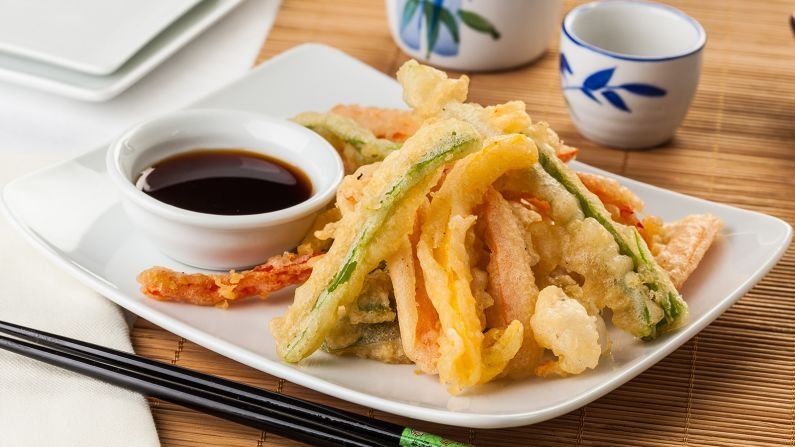
Tempura: Japan’s Delicate Deep-Fried Poetry
Light, lacy, and utterly addictive, tempura arrived in Japan via 16th-century Portuguese traders (the word “tempura” nods to their “Quatuor Tempora” fasting days). It’s veggies or shrimp in a featherweight batter—cold water, egg, and cake flour—fried at precise temps to stay crisp, not soggy. Dip in tentsuyu sauce, and it’s elegance in every crunch.
I slurped my first in Kyoto’s Nishiki Market, lotus root and shiso leaves vanishing too fast. The key? Freshness—overnight batter is a sin. Hunt it at Tenya in Tokyo for standing-room conveyor-belt bliss, or try home with a quick batter hack: Add vodka for extra snap.
Tempura Batter Basics
- Ingredients: 1 cup cake flour, 1 egg yolk, 1 cup ice-cold sparkling water.
- Technique: Whisk minimally—lumps are your friend for airiness.
- Fry Tip: 350°F oil; 2-3 minutes per piece.
Arancini: Sicily’s Stuffed Rice Bombs
These golden orbs of fried risotto hide treasures like ragù, mozzarella, or peas, breaded and plunged into hot oil for a cheesy core and shatter-crisp shell. Dating to 10th-century Sicily (Arabs brought rice; locals said, “Let’s fry it!”), they’re feast-day stars but everyday heroes now.
In Palermo’s Ballarò Market, I bit into one hot from the frier—molten cheese escaping like lava. Emotional? A little. Authentic spots like I Cuochini serve ’em steaming; pair with a cold Birra Moretti.
Poutine: Canada’s Gravy-Soaked Indulgence
Fries crowned with squeaky cheese curds and hot gravy? Quebec’s 1950s truck-stop invention is messy genius, born when a customer begged “poutine” (local slang for “pudding”) on his fries. It’s comfort in chaos, the gravy melting curds into savory silk.
My Montreal initiation at La Banquise: Midnight line, but that first forkful—pure euphoria. Variations add bacon or foie gras; purists stick to La Belle Province’s original.
Churros: Spain’s Cinnamon-Dusted Spirals
Extruded dough fried into ridged sticks, rolled in sugar and cinnamon—these Spanish sweets (Moors get credit, circa 10th century) are dunked in thick hot chocolate for ultimate sin. Crispy outside, soft inside, they’re street food royalty.
Madrid’s Chocolatería San Ginés is pilgrimage-worthy; I went twice in one trip, blaming jet lag. DIY: Pipe batter into 375°F oil, fry 2 minutes, dust generously.
Falafel: Middle East’s Chickpea Crunch
Ground chickpeas, herbs, and spices formed into balls, fried to nutty perfection—these Egypt-to-Lebanon staples (falafel means “pepper” in Arabic) wrap in pita with tahini and veggies for a protein-packed street hug.
Tel Aviv’s falafel stands are legend; mine at Hakosem was tahini-drenched heaven. Vegan win: High fiber, low cal if air-fried.
Karaage: Japan’s Juicy Chicken Nuggets
Marinated chicken thigh chunks, coated in soy-ginger starch, fried twice for shatter-crisp skin and juicy bite. Post-WWII Japanese twist on Western fry techniques, now a konbini staple.
Osaka’s endless karaage spots; I devoured at Gindaco, sauce dripping. Healthier hack: Use cornstarch for less oil soak.
Pakora: India’s Veggie Fritter Fiesta
Chickpea-battered onions, spinach, or potatoes, spiced and fried—Punjab’s rainy-day snack since Mughal times. Dip in chutney for zing.
Delhi’s Paranthe Wali Gali; my monsoon munch was spice-blissed. LSI: Crispy Indian snacks, deep-fried veggies.
Hushpuppies: US South’s Cornmeal Kisses
Cornmeal dough balls, fried golden—Civil War lore says they hushed hunting dogs. Now, they’re catfish’s BFF, onion-flecked and buttery.
Charleston’s Husk serves elevated versions; my Lowcountry bite was pure nostalgia.
Chicharrones: Pork Rind Perfection from Spain to Latin America
Crispy fried pork belly or skin, seasoned simply—nose-to-tail genius from ancient Iberia, now a beer buddy everywhere.
Mexico City’s taquerias; I crunched at El Califa de León, chili-dusted.
Tostones: Caribbean’s Twice-Fried Plantain Party
Smashed green plantains, fried twice for chip-like crunch—Taíno roots, now Puerto Rico to Ecuador’s star.
San Juan’s food trucks; my beachside batch was garlicky gold.
Scotch Eggs: Britain’s Picnic Powerhouse
Boiled egg wrapped in sausage, breaded, fried—17th-century Fortnum & Mason claim, but Indian kofta influences.
London’s The Black Pig; picnic-perfect.
Jalebi: India’s Syrupy Pretzel Swirls
Chickpea flour batter piped into coils, fried, soaked in saffron syrup—festive since 15th-century Mughal courts.
Delhi sweets shops; sticky-sweet bliss.
Sufganiyot: Israel’s Jelly-Filled Hanukkah Jewels
Yeast doughnuts fried in oil for the oil miracle, jelly-stuffed—Polish-Jewish import, now Tel Aviv tradition.
Jerusalem’s Sufganiyah stands during Hanukkah.
Fried Mars Bar: Scotland’s Cheeky Sweet Sin
Battered candy bar, deep-fried—1990s Aberdeenshire novelty, now global dare.
Glasgow chippies; my guilty giggle.
Croquettes: France’s Creamy Comfort Cubes
Béchamel or potato base, filled (ham, cheese), breaded, fried—post-WWII ration stretcher.
Paris bistros; silky surprise.
Samosas: South Asia’s Spice-Packed Pouches
Potato-pea filling in pastry triangles, fried crisp—Mughal-era, now global.
Mumbai street carts; chutney essential.
Onion Rings: America’s Batter-Blissed Circles
Sliced onions in beer batter, fried—1930s Crisco ad popularized.
Texas steakhouses; my road-trip staple.
Fried Green Tomatoes: Southern US Tang
Unripe tomatoes, cornmeal-coated, fried—Midwest roots, Southern fame.
Georgia farm stands; remoulade magic.
Prawn Toast: Hong Kong’s Sesame Shrimp Snack
Shrimp paste on bread, sesame-sprinkled, fried—British-colonial twist.
Hong Kong dim sum halls.
Kibbeh: Lebanon’s Bulgur Beef Bombs
Cracked wheat shell, spiced lamb filling, fried—ancient Mesopotamian.
Beirut meze spots.
Tonkatsu: Japan’s Pork Cutlet Crown
Panko-breaded pork loin, fried, sliced—19th-century Western import.
Tokyo’s Maisen; katsu sauce key.
Funnel Cakes: US Fairground Fluff
Batter funneled into hot oil, powdered sugar-dusted—Pennsylvania Dutch, 1870s fairs.
State fairs nationwide.
Kokis: Sri Lanka’s Lacy Rice Cookies
Rice flour-coconut milk batter, fried in rosette irons—Sinhalese New Year treat.
Colombo markets.
Lechon Kawali: Philippines’ Belly Bliss
Boiled-then-fried pork belly—fiesta staple.
Manila lechoneros.
Deep-Fried Zucchini Flowers: Italy’s Edible Art
Battered squash blossoms, fried—Roman Jewish roots.
Rome’s artichoke alleys.
Corn Dogs: US Fair Icon
Frank on a stick, cornmeal-battered—1930s Texas State Fair.
Iowa State Fair original.
Vegetable Pakora: India’s Chickpea Crunch
Mixed veggies in gram flour, fried—16th-century.
Street vendors galore.
Fried Chicken: Global Glory, US Soul
Buttermilk-brined, double-dredged—West African-Scottish fusion in the South.
Nashville’s Prince’s Hot Chicken.
Where to Hunt These Global Gems
Chasing authenticity? Start local: Tokyo for tempura at Tempura Kondo, London for fish and chips at Poppies. In the US, hit Gus’s Fried Chicken in Memphis. Travel tip: Street food apps like EatWith connect you to home cooks worldwide. For recipes, check Serious Eats’ fried guides.
Fried Foods Compared: Savory vs. Sweet
| Aspect | Savory Stars (e.g., Tempura, Falafel) | Sweet Sins (e.g., Churros, Jalebi) |
|---|---|---|
| Texture | Crisp shell, tender filling | Chewy-crisp, syrup soak |
| Pairing | Dips like soy or tahini | Hot drinks, fruit |
| Calories (per serving) | 200-400, veggie-heavy options | 300-500, sugar-loaded |
| Global Appeal | Street food staple | Festival favorite |
Savory wins for versatility, but sweet edges out for that post-meal glow.
Pros and Cons of Frying at Home
Pros:
- Control oil quality (use avocado for health).
- Customize spice levels.
- Cheaper than takeout.
Cons:
- Oil splatter mess.
- Temp mastery needed (thermometer essential).
- Cleanup nightmare.
Healthier Twists on Fried Favorites
Fried doesn’t mean fried nerves over calories. Opt for air-frying falafel (90% less oil) or double-fry at home with peanut oil for stability. Veggie pakoras pack fiber; hushpuppies with whole cornmeal add nutrients. My trick: Bake “fried” green tomatoes at 425°F for crunch without guilt. Remember, moderation’s the real MVP—enjoy, then walk it off.
People Also Ask: Your Fried Food Queries Answered
Based on real Google searches, here’s the scoop on what folks wonder most.
What is the most popular fried food in the world?
French fries top the charts, gobbled at 165 pounds per person yearly in Belgium. Globally, fried chicken nips at their heels—KFC alone serves billions.
Where did fried food originate?
Ancient Egypt, around 2500 BC, with tiger nut cakes fried in sesame oil. It spread via Romans and Moors, hitting Europe by the Middle Ages.
What is the healthiest fried food?
Vegetable tempura or pakora—light batters and fresh produce keep calories under 200 per serving. Air-fry for even better odds.
Are fried foods bad for you?
In excess, yes—trans fats and acrylamide lurk. But occasional veggie-focused fries? Fine, especially with olive oil. Balance with greens.
What country eats the most fried food?
The US leads at 76 pounds per capita yearly, thanks to fast-food fries and Southern staples. Belgium’s close behind.
FAQ: Your Burning Fried Food Questions
Q: How can I make fried foods at home without a deep fryer?
A: Use a heavy pot with 2-3 inches of oil and a candy thermometer. Heat to 350°F, fry in batches. For less mess, air-fryer mimics work wonders—try for karaage.
Q: What’s the best oil for frying global dishes?
A: Neutral like canola for tempura; peanut for samosas (high smoke point). Reuse filtered oil twice for eco-savings.
Q: Can I freeze fried foods for later?
A: Yes—cool completely, freeze on a sheet, then bag. Reheat in a 375°F oven for revived crunch. Arancini freezes like a champ.
Q: Are there vegan options in this fried world?
A: Absolutely—falafel, pakora, tostones. Swap eggs in batters with aquafaba for that bind.
Q: How do I avoid soggy fried bites?
A: Double-fry: Low temp first for cooking, high for crisp. Drain on racks, not paper—steam’s the enemy.
There you have it—30 fried wonders to fuel your next adventure. From my grandma’s wedges to a Sicilian arancini that nearly brought tears, these aren’t just foods; they’re invitations to savor life, one crunch at a time. What’s your fried guilty pleasure? Drop it in the comments—I might just chase it next. Safe travels, and may your oil always be hot.
About the Author