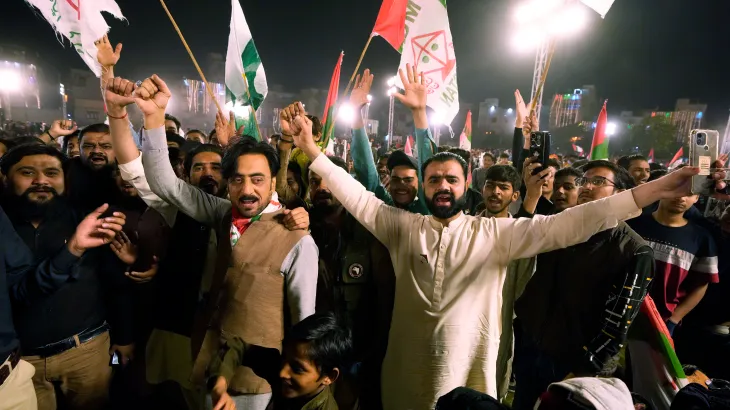
There’s a sense these days in Pakistan that everything is taut: the economy, civil society, political alliances, even the mood in the streets. With inflation biting, political leaders jailed or silenced, and tensions rising between institutions, what happens next is far from certain. But by looking closely at what’s already in motion—what people are saying, what institutions are doing—and comparing with past crises, one can map out plausible trajectories. Here’s how things might play out, what the risks are, and where Pakistan might find its way to stability (or deeper crisis).
What’s Driving the Crisis Now
Before we try to guess where things go, it’s important to be clear about what’s fueling the current instability. Several interlocking forces are at work.
- Economic stress: High inflation, large foreign debt, pressures from the IMF, and public frustration over daily cost of living. Many Pakistanis feel they’re paying the price of macroeconomic mismanagement.
- Political polarization: A divide between the ruling coalition (PML-N / PPP / establishment) vs. PTI and supporters of Imran Khan; accusations of rigging, misuse of state institutions, and legal harassment of opposition figures.
- Institutional strain: The judiciary, intelligence agencies, and especially the military are deeply involved in politics. Civil-military relations remain opaque but powerful. Public trust in political parties is low.
- Security and regional pressures: Militants exploiting political instability (e.g. in Balochistan, KP), external geopolitical pressures (relations with India, foreign investment, IMF).
I remember talking to a teacher in Lahore last winter—she said something that stuck with me: “When a kid asks for milk and keeps being told ‘wait’, eventually they throw things.” Many in Pakistan feel that way now: that they have asked, but are waiting, and perhaps about to lose patience.
Key Players & What They Want
Understanding who has power, what their goals are, and where they might compromise is essential to seeing the paths ahead.
| Actor | Main Interests | Constraints / Pressure Points |
|---|---|---|
| Ruling Coalition (PML-N, PPP, establishment) | Staying in power, securing IMF support, preserving institutional balance, keeping political stability | Public anger over prices, opposition protests, potential defections, constitutional or legal challenges |
| PTI & Imran Khan’s supporters | Political presence, reversal of legal cases, more fair elections, regaining popular base | Legal pressures, fragmentation, suppression of dissent, being labeled anti-state |
| Military / Intelligence Establishment | Maintaining influence, security, external legitimacy, preventing chaos or unrest that threatens order | International scrutiny, internal divisions, economic pressures (unable to shield everything), legitimacy risk if crackdown is too heavy |
| Civil Society / Media / Provinces | Rule of law, protection of rights, fair regional representation (Sindh, Balochistan, etc.), accountability | Restrictions, censorship, resources, risk of crackdown, provincial vs federal power tensions |
Possible Scenarios: How Things Could Unfold
Here are a few plausible scenarios over the next few days to a few weeks—each has its own risks, outcomes, and warning signs.
Scenario A: Managed Calm + Incremental Concessions
What Happens:
- The government makes some symbolic concessions (e.g. release of lower-level political prisoners, easing certain restrictions, promise of more transparent processes).
- PTI tone softens in public, perhaps avoids large-scale protests for now.
- The IMF enough confidence is maintained; some financial aid or disbursement helps ease immediate crisis of cash flows.
Pros:
- Avoids large-scale unrest; stabilizes markets and public confidence to some extent.
- Gives space for dialogue; reduces risk of severe crackdowns.
Cons:
- Underlying issues remain unresolved: structural reforms still hard; grievances in provinces persist.
- Might be seen by some as delaying tactics, increasing cynicism.
Warning Signs:
- Opposition demands not being met meaningfully (just symbolic gestures).
- Continued detentions of high-profile leaders.
- Inflation and shortages continuing despite promises.
Scenario B: Escalation and Polarisation
What Happens:
- PTI or its supporters organize mass protests (urban centres like Lahore, Karachi) in response to court verdicts or arrests.
- Government responds with stricter measures: curbing media, banning public gatherings, arrests.
- Possible clashes; legal and judicial interventions become more visible.
Pros (for actors pushing this):
- Could energise PTI’s base; force negotiations.
- Might draw international attention / sympathy.
Cons:
- Risk of violence; may provoke backlash from security forces.
- Economic fallout worsens—investment, tourism, business confidence decline further.
Warning Signs:
- Large protests called without permits, heavy police presence.
- Use of force by police or military.
- Social media escalation; reports of rights abuses.
Scenario C: Institutional Intervention / Power Shift
What Happens:
- Military or judiciary steps in more openly, either mediating a deal, imposing constraints, or otherwise altering the political balance (e.g., dismissals, caretaker setups).
- Perhaps some legal/judicial rulings that weaken ruling coalition’s hold or limit powers of certain offices.
Pros:
- Could bring rapid change; might force accountability.
- Potential to halt political uncertainty if done with consensus.
Cons:
- Seen by many as undermining democracy.
- Potential for instability if institutions themselves are split or lack legitimacy.
Warning Signs:
- Unusual moves by military leadership (statements, meetings, deployments).
- Judiciary issuing strong rulings against powerful actors.
- Parties or leaders publicly calling for caretaker setups or leadership change.
Scenario D: Economic Shockhorse → Social Unrest
What Happens:
- Something triggers a severe economic shock: major currency devaluation, default risk, inability to meet IMF terms, or collapse in foreign investment.
- Public frustration boils over: protests, strikes, possibly violence.
- Government might try to suppress dissent, leading to international pressure or crisis of legitimacy.
Pros:
- Not many who benefit; maybe those pushing for systemic reforms could use pressure.
Cons:
- Very high risk of instability. Potential humanitarian fallout. Threats to internal security increase.
Warning Signs:
- Sharp drop in foreign reserves, default risk in media.
- Sudden policy shifts (subsidy cuts, price hikes) without buffers.
- Rising crime / law and order breakdown in some areas.
What History Suggests
If we look back at earlier crises (2014-15, the no-trust motion in 2022, periods of military control or strong civilian governments under pressure), a few patterns emerge:
- Crackdowns often follow mass protest: When protests get large and reach institutional perimeters (courts, army installations), reactions tend to harden.
- Shadow power of military/intelligence acts as arbiter: Even when civilians are in power, major political outcomes are often mediated behind closed doors.
- Economic pressure tends to force compromise: Debt crises, IMF conditionalities, inflation spikes often make even strong governments yield or adjust policies.
- Public patience has limits: When basic livelihood is at stake (electricity, fuel, food), support for any side dwindles.
Where Things May Converge: Most Likely Path
Putting together all pieces—economic pressure, institutional power, popular sentiment—one likely path in the coming days/weeks is a hybrid of Scenario A + B, perhaps with touches of C.
- That is: a short period of protests / outcry followed by selective concessions from the government to prevent escalation.
- Some legal outcomes (court verdicts) or announcements may inflame sentiment; government may attempt to diffuse through dialogues, possibly mediated by military or judiciary.
- However, unless the economic issues are addressed in concrete and visible ways, the calm will be fragile.
What Would Be Needed to Stabilize Things
If stability is to return without deep suppression, a few steps seem critical. These don’t guarantee peace, but they raise chances.
- Transparent economic relief: Subsidies or cash transfers to the most vulnerable, measures to control inflation, reassurance over foreign reserve positions.
- Dialogue with PTI/opposition: Even symbolic gestures, or willingness to address unfair legal cases, could reduce tension.
- Institutional clarity: If military, judiciary and civilian authorities can signal that they respect democratic norms, it might help reduce fears of overreach.
- Media space / civil society leeway: Allowing reporting, protest (within law), and redress would cool some of the anger.
Risks & Wildcards
Uncertainty is high. Some factors could radically shift trajectories.
- Foreign influence or aid: Pressure from IMF or donor countries could force policy changes or even political shifts.
- Regional flare-ups: Border incidents, conflict with India, or terrorist attacks may shift attention and priorities.
- Internal splits among elites: If coalition partners fracture because of differing risk tolerances, things could unravel faster.
- Public sentiment tipping point: A spark (e.g., serious incident of police violence, fuel blackout) might trigger large protests that are hard to contain.
Comparison: Pakistan Today vs. Past Crises
| Feature | Past Crises (e.g. 2014-15 / 2022) | Today’s Crisis |
|---|---|---|
| Role of social media / diaspora activism | Present, but less pervasive; slower spread of outrage | Very strong both inside country and abroad; more immediate mobilization |
| Institutional instability | Military + judiciary strong behind scenes, but more predictable | More open disputes, legal cases against high-profiles, more visible tension |
| Economic vulnerability | Recurring, but periodic; sometimes mitigated by external aid | Acute inflation, near-crisis conditions, heavy dependency on external financing |
| Popular patience | Weariness, but people often hoped for change through elections | Growing frustration; many feel they’ve already tried electoral routes without change |
What People Also Ask (PAA)
Here are actual questions people are looking up related to this topic — and concise, useful answers.
Q: What is causing Pakistan’s political instability right now?
A: Multiple factors: economic crisis (inflation, debt), political polarization (PTI vs ruling coalition), institutional overreach, legal actions against opposition, and social frustration among ordinary citizens.
Q: Could Pakistan’s military intervene again in politics?
A: It’s possible. The military remains a powerful political actor behind the scenes. If civilian governance is seen widely as failing or destabilizing, there is historical precedent for more overt intervention.
Q: What role is the IMF playing in Pakistan’s crisis?
A: The IMF is one of the key external stakeholders. Pakistan needs IMF support to shore up its finances. But IMF conditions often force unpopular economic measures like subsidy removal or austerity, which may provoke public backlash.
Q: Will protests help or hurt Pakistan’s political situation?
A: Both. Protests raise awareness and force action, but they also risk provoking harsh responses, economic disruptions, or backlash. Their impact depends on leadership, peacefulness, and how quickly demands are addressed.
FAQ Section
Here are 4–5 real user questions & answers people often ask, to help clarify critical pieces.
Q1: How likely is it that a political compromise will be reached soon?
A1: Moderately likely, given the stakes. No actor is well placed to risk a full collapse. Economic pressures make delay costly. So some compromise—though perhaps minimal—is the probable outcome in the short term.
Q2: Can the opposition (PTI) regain power or influence?
A2: It depends. Legal and institutional constraints are severe. Unless there is a shift (through courts, change in public mood, or fractures in power), PTI’s regaining power in the immediate term seems challenging. Influence is likelier than full power.
Q3: What economic indicators should people watch for warning signs?
A3: Look at inflation (especially food/fuel), foreign exchange reserves, FX rate volatility, IMF disbursements, government’s ability to service debt, cuts to subsidies, and business investment trends.
Q4: What is the role of provinces like Balochistan and Sindh in the crisis?
A4: They are crucial. Many grievances (ethnic, resource, governance) are most acute in those provinces. Protests and instability there could escalate and affect national politics (especially via disruptions, human rights issues, or demands for autonomy).
What You Should Keep Watching
To see which scenario might unfold, here are the key signals to track:
- Major court rulings against any political leader, especially PTI leaders.
- Announcements of policy shifts: fuel price hikes, subsidy removals, inflation mitigation measures.
- Protests or large-scale mobilizations in Karachi, Lahore, Islamabad.
- Statements from military leadership or high-ranking intelligence/judiciary figures hinting at “stability”, “intervention”, or “caretaker” scenarios.
- IMF action or statements; foreign governments’ reactions; how embassies see risk (which affects investment).
Conclusion
Pakistan’s political moment is precarious: any path forward is littered with speed bumps. Yet there’s enough momentum in multiple directions—economic pressure, public discontent, institutional power—to force some change, whether gradual or sudden. The best case is where leaders choose to respond with openness, concessions, and reforms, avoiding escalation. The worst case is that tension spirals—crackdowns, unrest, erosion of democratic institutions.
For ordinary people, the hope is that whichever path the country takes, their voices aren’t lost, and that politics serves the many, not just the powerful. After all, stability isn’t an end in itself—it’s meaningful only if it improves lives.